
God’s Free Health Plan
Lesson 13
Good medical care is priceless—but wouldn’t it be great if we didn’t need doctors anymore? Well, did you know there is a proven way to put a lot of doctors out of work? … Take care of your body! Scientists have sounded the alarm about cholesterol, tobacco, stress, obesity, and alcohol, so why press your luck? God truly cares how you treat your body, and He’s given you a free health plan to go by—the Bible! For amazing facts about how you can have abundant health and longer life, look over this Study Guide—but be sure to read it all before jumping to conclusions!
1. Are health principles really a part of true Bible religion?
“Beloved, I pray that you may prosper in all things and be in health, just as your soul prospers” (3 John 1:2).
Answer: Yes. The Bible rates health right near the top of the list in importance. A person’s mind, spiritual nature, and body are all interrelated and interdependent. What affects one affects the others. If the body is misused, the mind and the spiritual nature cannot become what God planned they should be—and you won’t be able to live an abundant life. (See John 10:10.)

2. Why did God give health principles to His people?
“The Lord commanded us to observe all these statutes, to fear the Lord our God, for our good always, that He might preserve us alive” (Deuteronomy 6:24).
“You shall serve the Lord your God, and He will bless your bread and your water. And I will take sickness away from the midst of you” (Exodus 23:25).
Answer: God gave health principles because He knows what is best for the human body. Automobile manufacturers place an operations manual in the glove compartment of each new car because they know what is best for their creation. God, who made our bodies, also has an “operations manual.” It is the Bible. Ignoring God’s “operations manual” often results in disease, twisted thinking, and burned-out lives, just as abusing a car can result in serious car trouble. Following God’s principles results in “saving health” (Psalm 67:2 KJV) and more abundant life (John 10:10). With our cooperation, God can use these great health laws to significantly reduce and eliminate the effects of the diseases of Satan (Psalm 103:2, 3).
3. Do God’s health principles have anything to do with eating and drinking?
“Eat what is good” (Isaiah 55:2).
“Whether you eat or drink, or whatever you do, do all to the glory of God” (1 Corinthians 10:31).
Answer: Yes. A Christian will even eat and drink differently—all to the glory of God—choosing only “what is good.” If God says a thing is not fit to eat, He must have a good reason. He is not a harsh dictator, but a loving Father. All His counsel is for our good always. The Bible promises, “No good thing will He withhold from those who walk uprightly” (Psalm 84:11). So if God withholds a thing from us, it is because it is not good for us.

Note: No person can eat his or her way into heaven. Only acceptance of Jesus Christ as Lord and Savior can do that. Ignoring God’s health laws, however, might cause a person to lose his good judgment and fall into sin, even to the point of losing salvation.
4. What did God give people to eat when He created them in a perfect environment?

“God said, ‘See, I have given you every herb that yields seed … every tree whose fruit yields seed. … Of every tree of the garden you may freely eat’ ” (Genesis 1:29; 2:16).
Answer: The diet God gave people in the beginning was fruit, grains, and nuts. Vegetables were added a little later (Genesis 3:18).
5. What items are specifically mentioned by God as being unclean and forbidden?
Answer: In Leviticus 11 and Deuteronomy 14, God points out the following food groups as being unclean. Read both chapters in full.
A. All animals that do not both chew the cud and have a split hoof (Deuteronomy 14:6).
B. All fish and water creatures that do not have both fins and scales (Deuteronomy 14:9). Nearly all fish are clean.
C. All birds of prey, carrion eaters, and fish eaters (Leviticus 11:13–19).
D. Most “creeping things” (or invertebrates) (Leviticus 11:21–44).

Note: These chapters make it clear that most animals, birds, and water creatures people ordinarily eat are clean. There are, however, some notable exceptions. According to God’s rules, the following animals are unclean and are not to be eaten: cats, dogs, horses, camels, eagles, vultures, hogs, squirrels, rabbits, catfish, eels, lobsters, clams, crabs, shrimp, oysters, frogs, and others.
6. If a person likes pork and eats it, will he really be destroyed at the second coming?
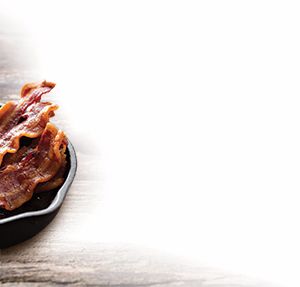
“Behold, the Lord will come with fire … and by His sword the Lord will judge all flesh; and the slain of the Lord shall be many. Those who sanctify themselves and purify themselves … eating swine’s flesh and the abomination and the mouse, shall be consumed together” (Isaiah 66:15–17).
Answer: This may be shocking, but it is true and must be told. The Bible says that anyone who eats “swine’s flesh” and other unclean things that are an “abomination” will be destroyed at the coming of the Lord. When God says to leave something alone and not eat it, we should by all means obey Him. After all, the eating of forbidden fruit by Adam and Eve brought sin and death to this world in the first place. Can anyone say it doesn’t matter? God says people will be destroyed because they “chose that in which I do not delight” (Isaiah 66:4).
7. But didn’t this law of clean and unclean animals originate with Moses? Wasn’t it for the Jews only, and didn’t it end at the cross?
“The Lord said to Noah, … ‘take with you seven each of every clean animal … two each of animals that are unclean’ ” (Genesis 7:1, 2).
Answer: No on all points. Noah lived long before any Jews existed, but he knew of the clean and unclean animals, because he took into the ark the clean ones by sevens and the unclean ones by twos. Revelation 18:2 refers to some birds as being unclean just before the second coming of Christ. The death of Christ did not in any way affect or change these health laws, since the Bible says that all who break them will be destroyed when Jesus returns (Isaiah 66:15–17). The Jew’s digestive system in no way differs from the Gentile’s digestive system. These health laws are for all people for all time.

8. Does the Bible say anything about the use of alcoholic beverages?

“Wine is a mocker, strong drink is a brawler, and whoever is led astray by it is not wise” (Proverbs 20:1).
“Do not look on the wine when it is red, when it sparkles in the cup, when it swirls around smoothly; at the last it bites like a serpent, and stings like a viper” (Proverbs 23:31, 32).
“Neither fornicators … nor drunkards … will inherit the kingdom of God” (1 Corinthians 6:9, 10).
Answer: Yes. The Bible strongly warns against the use of alcoholic beverages.
9. Does the Bible warn against the use of other harmful substances, such as tobacco?
Answer: Yes. The Bible gives six reasons why the use of harmful substances, such as tobacco, are displeasing to God:
A. The use of harmful substances injures health and defiles the body. “Do you not know that you are the temple of God and that the Spirit of God dwells in you? If anyone defiles the temple of God, God will destroy him. For the temple of God is holy, which temple you are”
(1 Corinthians 3:16, 17).
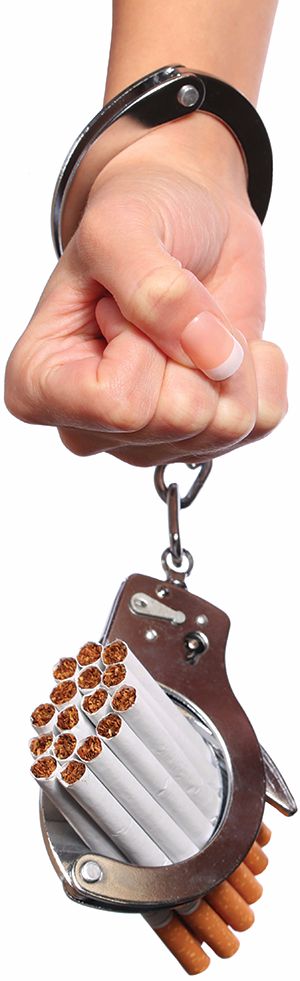
B. Nicotine is an addictive substance that enslaves people. Romans 6:16 says that we become servants to whomever (or whatever) we yield ourselves. Tobacco users are slaves to nicotine. Jesus said, “You shall worship the Lord your God, and Him only you shall serve” (Matthew 4:10).
C. The tobacco habit is unclean. “Come out from among them and be separate, says the Lord. Do not touch what is unclean, and I will receive you” (2 Corinthians 6:17). Isn’t it preposterous to think of Christ using tobacco in any form?
D. The use of harmful substances wastes money. “Why do you spend money for what is not bread?” (Isaiah 55:2). We are God’s stewards of the money given us, and “it is required in stewards that one be found faithful” (1 Corinthians 4:2).
E. The use of harmful substances weakens our ability to discern the promptings of the Holy Spirit. “Abstain from fleshly lusts which war against the soul” (1 Peter 2:11). The use of harmful substances is a fleshly lust.
F. The use of harmful substances shortens life. Science has confirmed that the use of tobacco can dramatically shorten life spans. This breaks God’s command against killing (Exodus 20:13). Even though it is slow murder, it is still murder. One of the best ways to postpone your funeral is to quit using tobacco.
10. What are some of the simple yet important health laws found in the Bible?

Answer: Here are 11 Bible health principles:
A. Eat your meals at regular intervals, and do not use animal fat or blood. “Feast [eat] at the proper time” (Ecclesiastes 10:17). “This shall be a perpetual statute … you shall eat neither fat nor blood” (Leviticus 3:17).
Note: Science has confirmed that most heart attacks result from high cholesterol—and that the use of fats is largely responsible for high levels of cholesterol. It looks like the Lord knows what He is talking about after all, doesn’t it?
B. Don’t overeat. “Put a knife to your throat if you are a man given to appetite” (Proverbs 23:2). In Luke 21:34, Christ specifically warned against “carousing” (intemperance) in the last days. Overeating, a form of intemperance, is responsible for many degenerative diseases.
C. Don’t harbor envy or hold grudges. These kinds of sinful feelings actually disrupt body processes. The Bible says that envy is “rottenness to the bones” (Proverbs 14:30). Christ even commanded us to clear up grudges that others might hold against us (Matthew 5:23, 24).
D. Maintain a cheerful, happy disposition.
“A merry heart does good, like medicine” (Proverbs 17:22).
“As he thinks in his heart, so is he” (Proverbs 23:7).
Many diseases from which people suffer are a result of depression. A cheerful, happy disposition imparts health and prolongs life!


E. Put full trust in the Lord. “The fear of the Lord leads to life, and he who has it will abide in satisfaction” (Proverbs 19:23). Trust in the Lord strengthens health and life. “My son, give attention to my words … for they are life to those who find them, and health to all their flesh” (Proverbs 4:20, 22). Health comes from obedience to God’s commands and from putting full trust in Him.

F. Balance work and exercise with sleep and rest. “Six days you shall labor and do all your work, but the seventh day is the Sabbath of the Lord your God. In it you shall do no work” (Exodus 20:9, 10).
“The sleep of a laboring man is sweet” (Ecclesiastes 5:12).
“In the sweat of your face you shall eat bread” (Genesis 3:19).
“It is vain for you to rise up early, to sit up late” (Psalm 127:2). “For what has man for all his labor, and for the striving of his heart with which he has toiled under the sun? Even in the night his heart takes no rest. This also is vanity” (Ecclesiastes 2:22, 23).

G. Keep your body clean. “Be clean” (Isaiah 52:11).
H. Be temperate in all things.
“Everyone who competes for the prize is temperate in all things” (1 Corinthians 9:25).
“Let your gentleness [KJV: moderation] be known to all men” (Philippians 4:5). A Christian should completely avoid things that are harmful and be moderate in the use of things that are good. Habits that injure health break the command “You shall not murder” by degrees. They are suicide on the installment plan.
I. Avoid anything harmful to the body (1 Corinthians 3:16, 17). This might surprise you, but medical science confirms that tea, coffee, and soft drinks that contain the drug caffeine and other harmful ingredients are damaging to the human body. None of these contains food value except through the sugar or cream added, and most of us already use too much sugar. Stimulants give a damaging, artificial boost to the body and are like trying to carry a ton in a wheelbarrow. The popularity of these drinks is due not to flavor or advertising, but to the doses of caffeine and sugar they contain. Many Americans are sickly because of their addiction to coffee, tea, and soft drinks. This delights the devil and damages human lives.
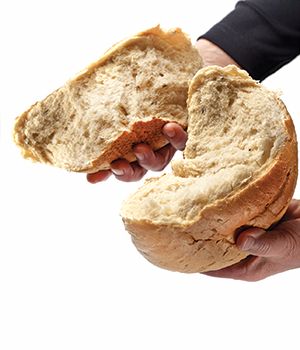
J. Make mealtime a happy time.
“Every man should eat and drink and enjoy the good of all his labor—it is the gift of God”
(Ecclesiastes 3:13). Unhappy scenes at mealtime hinder digestion. Avoid them.
K. Help those who are in need.
“Loose the bonds of wickedness … undo the heavy burdens … share your bread with the hungry, and … bring to your house the poor who are cast out; when you see the naked … cover him, and … your healing shall spring forth speedily” (Isaiah 58:6–8). This is too plain to misunderstand: When we help the poor and needy, we improve our own health.
11. What solemn reminder is given to those who ignore God’s principles?
“Do not be deceived, God is not mocked; for whatever a man sows, that he will also reap” (Galatians 6:7).
Answer: Those who ignore God’s health principles will more likely reap broken bodies and burned-out lives, just as one who abuses his automobile will likely have serious car trouble. And those who continue to break God’s laws of health will ultimately be destroyed (1 Corinthians 3:16, 17). God’s health laws are not arbitrary—they are natural, established laws of the universe, such as the law of gravity. Ignoring these laws can bring disastrous results! The Bible says, “A curse without cause shall not [come]” (Proverbs 26:2). Trouble comes when we ignore the laws of health. God, in mercy, tells us what these laws are so we may avoid the tragedies that result from breaking them.

12. What shocking truth about health involves our children and grandchildren?

“You shall not eat it, that it may go well with you and your children after you” (Deuteronomy 12:25).
“I, the Lord your God, am a jealous God, visiting the iniquity of the fathers upon the children to the third and fourth generations of those who hate Me” (Exodus 20:5).
Answer: God makes it plain that children and grandchildren (to the fourth generation) pay for the folly of parents who ignore God’s health principles. The children and grandchildren inherit weakened, sickly bodies when their mothers and fathers defy God’s rules for their lives. Wouldn’t you avoid anything else that might harm your precious children and grandchildren?
13. What other sobering fact does God’s Word reveal?
“There shall by no means enter it [God’s kingdom of glory] anything that defiles” (Revelation 21:27).
“ ‘As for those whose hearts follow the desire for their detestable things and their abominations, I will recompense their deeds on their own heads,’ says the Lord God” (Ezekiel 11:21).
Answer: Nothing defiling or unclean will be permitted in God’s kingdom. All filthy habits defile a person. Use of improper food defiles a person (Daniel 1:8). It is sobering but true. Choosing their own ways and those things in which God does not delight will end up costing people their eternal salvation (Isaiah 66:3, 4, 15–17).

14. What should every sincere Christian endeavor to do at once?

“Let us cleanse ourselves from all filthiness of the flesh and spirit” (2 Corinthians 7:1).
“Everyone who has this hope in Him [Christ] purifies himself, just as He is pure” (1 John 3:3).
“If you love Me, keep My commandments” (John 14:15).
Answer: Sincere Christians will bring their lives into harmony with God’s health principles immediately because they love Him. They know that His rules only add to their happiness and protect them from the devil’s diseases (Acts 10:38). God’s counsel and rules are always for our good, just as good parents’ rules and counsel are best for their children. And once we know better, God holds us accountable. “To him who knows to do good and does not do it, to him it is sin” (James 4:17).
15. Some evil habits bind people so tightly. What can they do?
“As many as received Him, to them He gave the right to become children of God” (John 1:12).
“I can do all things through Christ who strengthens me” (Philippians 4:13).
Answer: You can take all of these habits to Christ and lay them at His feet. He will joyfully give you a new heart and the power you need to break any sinful habit and become a son or daughter of God (Ezekiel 11:18, 19). How thrilling and heartwarming it is to know that “with God all things are possible” (Mark 10:27). And Jesus said, “The one who comes to Me I will by no means cast out” (John 6:37). Jesus is ready to break the shackles that bind us. He longs to set us free and He will, but only we will permit it. Our worries, bad habits, nervous tensions, and fears will be gone when we do His bidding. “These things I have spoken to you … that your joy may be full” (John 15:11). The devil argues that freedom is found in disobedience, but this is false! (John 8:44).

16. What thrilling promises are given about God’s new kingdom?

“The inhabitant will not say, ‘I am sick’ ” (Isaiah 33:24).
“There shall be no more death, nor sorrow, nor crying. There shall be no more pain” (Revelation 21:4).
“They shall mount up with wings like eagles, they shall run and not be weary, they shall walk and not faint” (Isaiah 40:31).
Answer: The citizens of God’s new kingdom will gladly follow His health principles, and there will be no sickness or disease. They will be blessed with eternal vigor and youth and will live with God in supreme joy and happiness throughout all eternity.
17. Since healthful living truly is a part of Bible religion, are you willing to follow all of God’s health principles?
Answer:

Thought Questions
1. First Timothy 4:4 says, “Every creature of God is good, and nothing is to be refused.” Can you explain this?
This Scripture passage is referring to foods “which God created to be received with thanksgiving” (verse 3) by His people. These foods are the clean foods listed in Leviticus 11 and Deuteronomy 14. Verse 4 makes it clear that all creatures of God are good and not to be refused, provided they are among those created to be “received with thanksgiving” (clean animals). Verse 5 tells why these animals (or foods) are acceptable: They are “sanctified” by God’s Word, which says they are clean, and by a “prayer” of blessing, which is offered before the meal. Please note, however, that people who try to “sanctify themselves” while eating unclean foods will ultimately be destroyed (Isaiah 66:17).
2. Matthew 15:11 says, “Not what goes into the mouth defiles a man; but what comes out of the mouth.” How do you explain this?
The subject in Matthew 15:1–20 is eating without first washing the hands (verse 2). The focus here is not eating, but washing. The scribes taught that eating any food without a special ceremonial washing defiled the eater. Jesus said these ceremonial washings were meaningless. In verse 19, He listed certain evils: murders, adulteries, thefts, etc. Then He concluded, “These are the things which defile a man, but to eat with unwashed hands does not defile a man” (verse 20).
3. But didn’t Jesus cleanse all animals in Peter’s vision, as recorded in Acts 10?
No. The subject of this vision is not animals, but people. God gave Peter this vision to show him that the Gentiles were not unclean, as the Jews believed. God had instructed Cornelius, a Gentile, to send men to visit Peter. But Peter would have refused to see them if God had not given him this vision, because Jewish law forbade entertaining Gentiles (verse 28). But when the men finally did arrive, Peter welcomed them, explaining that ordinarily he would not have done so, and saying, “God has shown me that I should not call any man common or unclean” (verse 28). In the next chapter (Acts 11), the church members criticized Peter for speaking with these Gentiles. So Peter told them the whole story of his vision and its meaning. And Acts 11:18 says, “When they heard these things they became silent; and they glorified God, saying, ‘Then God has also granted to the Gentiles repentance to life.’ ”
4. What did God make the hog for, if not to eat?
He made it for the same purpose that He made the buzzard—as a scavenger to clean up garbage. And the hog serves this purpose admirably.
5. Romans 14:3, 14, 20, says: “Let not him who eats despise him who does not eat. … There is nothing unclean of itself. … All things indeed are pure.” Can you explain this?
Verses 3 through 6 contrast people who eat certain things with those who do not. The passage does not say either is right, but rather counsels that neither pass judgment on the other. Instead, let God be the Judge (verses 4, 10–12). Verses 14 and 20 refer to foods that were first offered to idols—and, thus, were ceremonially unclean—not to the clean and unclean meats of Leviticus chapter 11. (Read 1 Corinthians 8:1, 4, 10, 13.) The point of the discussion is that no food is “unclean” or “impure” just because it has first been offered to idols, because an idol is “nothing in the world” (1 Corinthians 8:4). But if a person’s conscience bothers her for eating such food, she should leave it alone. Or even if it merely offends someone else, she should likewise abstain.
6. Isn’t it enough to just love the Lord and not concern ourselves with God’s laws of health?
But if you truly love the Lord, you will be eager to obey His health laws because that’s the way He has designed for you to achieve optimal health, happiness, and purity. “He became the author of eternal salvation to all who obey Him” (Hebrews 5:9). Jesus said, “If you love Me, keep My commandments” (John 14:15). When we truly love the Lord, we won’t try to dodge His health laws (or any other commandments) or make excuses. This attitude actually reveals the true heart in the other things of God. “Not everyone who says to Me, ‘Lord, Lord,’ shall enter the kingdom of heaven, but he who does the will of My Father in heaven” (Matthew 7:21).
Quiz Questions
[wp_quiz id=”14720″]